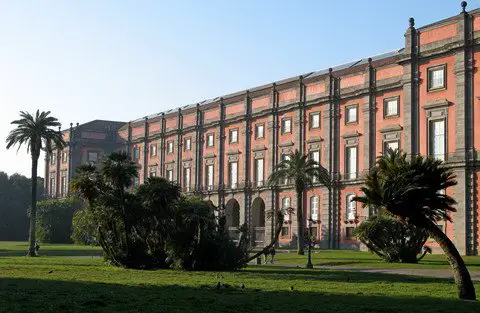
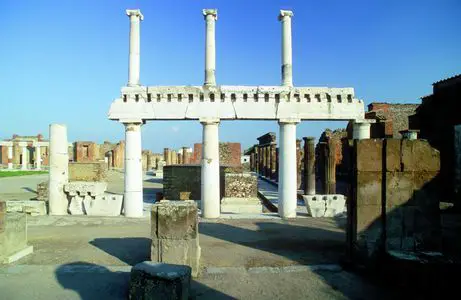
The National Archaeological Museum is Europe’s most important and largest archaeological museum. Here, you can see most of the findings from the excavations of Pompeii and Herculaneum, two towns that were destroyed by the eruption of Mount Vesuvius, in the year 79 A.D.
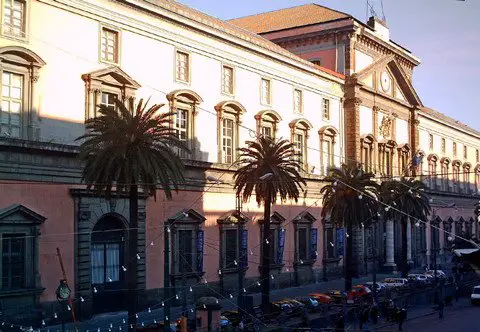
Museo Archeologico Nazionale in Naples (© Portanapoli.com)
Visiting the Museo Archeologico Nazionale in the historic centre of Naples is a great addition to your visit to the excavations of Pompeii and Herculaneum. It is one of the most important museums in Naples and Italy.
The Farnese Collection includes bronze- and marble statues (e.g., the magnificent large sculptures of the Farnese Hercules and the Farnese Bull) as well as paintings and important findings from Pompeii and Herculaneum. Large-sized wall decorations, tableware, and papyrus rolls please the eyes of the beholder.
Erotica collection with paintings from Pompeii
The centre of attraction is the mosaic from the Casa del Fauno in Pompeii, which consists of over 1.5 Million little pieces and shows a scene from the battle between Alexander the Great and the Persian King Darius III. Since 2000, you can also see the antique Erotica collection, which was locked away in the Secret Room for a long time and includes erotic wall paintings from Pompeii.
The lower ground floor displays the collection of the Borgia family with important excavation findings from Egypt.
The museum building from 1585 has a long history
Originally, it was used as a cavalry barracks before it became the headquarters of the university in 1612. In 1748, Sanfelice added a wing, which, since 1773, houses a collection of antiquities the Bourbon king, Charles III, inherited from the Farnese family from Parma in 1735.
Address: National Archaeological Museum
Piazza Museo 19, 80135 Napoli
Tel. 0039.081.440166 – Fax 0039.081.440013
Web: www.archeona.arti.beniculturali.it/sanc_it/mann/home.html
Approach: Metro Line 1, underground station “Museo ”
Tickets and tours