Yearly on the first weekend of May and on the 19th September amazement spreads through Naples Cathedral. There one can marvel at how the blood of the beheaded San Gennaro liquifies in its ampoule.
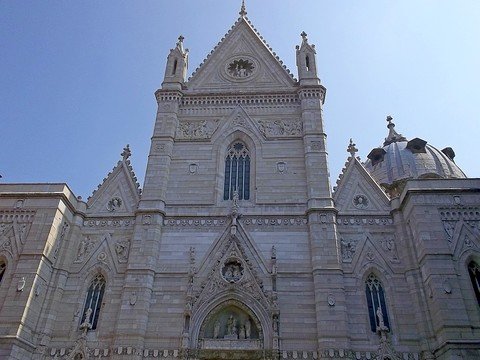
Cathedral San Gennaro, Place of the blood miracle (© Umberto – Portanapoli.com)
The day of the blood miracle is an important feast for Naples and the people celebrate it accordingly. The Cathedral is surrounded by stalls selling sweets, cobs and all kinds of curiosities.
In advance a procession takes place, whereby holy figures are carried through Spaccanapoli in the historic centre.
The silver bust of San Gennaro leads the procession,
followed by holy Teresa, Lucia, Patricia and many more. The Neapolitans like to bet on the sequence of these holy statues, while applauding their favourite saint in the hope that these would get a place at front at the following procession.
At the subsequent service a centuries-old ritual takes place: the Saint’s silver bust is positioned next to the altar and the ampoule with blood is shown to the faithful by the “abate del tesoro“ and then slowly turned. Shortly after this, traditional prayers of the “parenti di San Gennaro“ (relatives of San Gennaro, a group of faithful women, sitting in the front row) are said. These prayers heighten ecstatically until the blood liquifies. The wild rejoicing of the faithful is crowned by the sound of the cathedral’s bells ringing. The crowd starts pushing its way through to kiss the ampoule of blood. This overcrowded service is attended by spiritual authorities, political dignitaries and hundreds of anticipating believers.
For most of the natives of Naples the Blood Miracle has an oracle character
According to the people this blood miracle takes place, when no disaster is expected in the near future.The absence of the miracle augurs tragedy for Naples and its surroundings. For instance in 1980 before the harsh earthquake took its toll on 2000 lives, the blood didn’t liquify.
The people of Naples rather have a personal than religious relationship with San Gennaro. They present him their wishes with love and expect them to be fulfilled.
The story of the blood miracle
Saint Gennaro was the bishop of Benevento and was beheaded during the persecution of Christians by Diocletian in 305. According to the legend a woman collected and kept some of the martyr’s blood in an ampoule, after he died. In 313 the miracle occurred for the first time, after the Saint’s skeleton and the ampoule with blood were brought to Naples. The skeleton was placed to rest in the catacomb together with the ampoule. In the 9th century the remains and blood of S. Gennaro were in a small chapel, next to the church, where in the 14th century the cathedral was built.
There are numerous records on the liquefaction of the blood
dating from times before 1649 when they officially started recording this miracle. One of the descriptions of the procession dates from the year 1389. According to writings in 1528 the blood miracle didn’t take place. This was the year the pest broke out and Naples didn’t receive its raise from France. There are hundreds of records of the liquefaction dating from the 16th Century.